Thursday, 16 May 2013

Human Consumption By Jonny Mackay


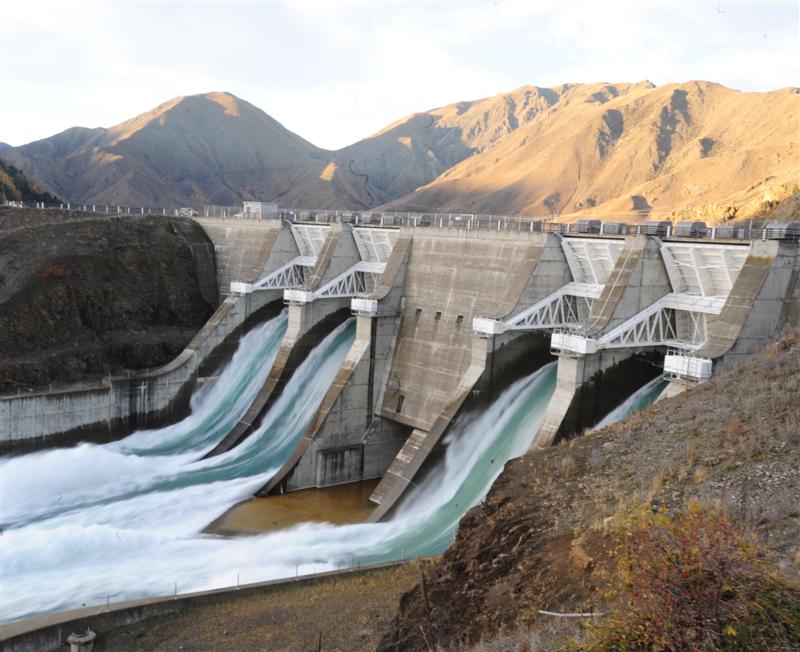
Hydroelectric power in New Zealand has been a part of the country’s energy system for over 100 years and continues to provide more than half of the country’s electricity needs. 

The first industrial hydro-electric power plant was established at Bullendale in Otago in 1885, to provide power for a 20 stamp battery at the Phoenix mine.

The first hydro-electric power station constructed by the government was the Okere Falls hydro-electric station near Rotorua. The plant began operating in May 1901. Electricity was transmitted at 3300 volts over a 13-mile (21 km) route to Rotorua, and was used to drive sewage pumps, and some public buildings including five thermal baths.

There has been opposition to hydroelectric power on environmental grounds for many decades.                                                                                                                                       

The first nationwide environmental campaign in New Zealand was opposition to raising Lake Manapouri for a power station to supply electricity to an aluminium smelter. The Save Manapouri Campaign was a success and the power station was built without raising the level of lake outside of its natural range.

The highly endangered Black Stilt, which nests on the braided rivers beds of the South Island, is threatened by changes in river flows as a result of new hydro dams and changes in flow regimes for existing dams. The Upper Waitaki Power Development posed a threat to the black stilt habitat and a programme was set up to lessen the threats.


Hydro is New Zealand’s highest electricity producer with over 50% of New Zealand’s annual electricity production.


Interesting Facts and Uses of Water By Scott Hamilton


Do you know drinking too much water too quickly can lead to water intoxication just like alcohol Water intoxication occurs when water dilutes the sodium level in the bloodstream and causes an imbalance of water in the brain? Water intoxication is most likely to occur during periods of intense training. While you should be having eight cups of water a day, not all of this water needs to be in the liquid form. Almost all food and drink provides some water to the body.

Soft drinks, coffee, and tea, while made up almost entirely of water, also contain caffeine. Caffeine can prevent water from traveling to necessary locations in the body just like old age.

Pure water (solely hydrogen and oxygen atoms) has a neutral PH of 7, which is neither acidic nor basic its neutral.

Water dissolves more substances than any other liquid. Wherever it travels, water carries chemicals, minerals, and nutrients with it. Much more fresh water is stored under the ground in aquifers than on the earth ‘surface.

The same water that existed on the earth millions of years ago is still present today true stuff. The total amount of water on the earth is about 326 million cubic miles of water.

Of all the water on the earth, humans can use only 0.3 percent of this waterman that sucks. This water is found in groundwater aquifers, rivers, and freshwater lakes.

The United States uses about 346,000 million gallons of fresh water every day. The United States uses nearly 80 percent of its water for irrigation and thermoelectric power, farmers hog all the water.

Approximately 85 percent of U.S. Citizens get their water from public water facilities. The other 15 percent supply their own water from private wells or other sources surprising its only 15 percent.

By the time a person feels thirsty; their body has only lost over 1 percent of their water in their body not much ae.

The weight a person loses directly after intense physical activity is weight from water, not fat that’s pretty gutting.


1. Hot Water Freezes Faster Than Cold Water

Take two pails of water; fill one with hot water and the other one with cold water, and put them in the freezer. The hot one would be frozen before the cold one. But wait wouldn't the hot water have to cool down to the temperature of the cold water before it reaches freezing temperature, where the cold one doesn’t have to cool down before freezing?

In 1963, a Tanzanian high-school student named was freezing hot ice cream mix in a cooking class when he noticed that a hot mix actually froze faster than a cold mix. When he asked his teacher about this, his teacher laughed at him. Thankfully, he didn't back down - he convinced a physics professor to conduct an experiment which eventually confirmed it in certain conditions, hot water freezes before cold water trippy as .no one exactly how it’s done.

But some people think hot water freezes first it forms ice at a higher temperature than cold water, where cold water freezes faster it takes less time to reach the super cooled state then it forms ice) http://www.neatorama.com/2008/08/22/5-really-weird-things-about-water/


Snow Skiing By Jack Ludemann


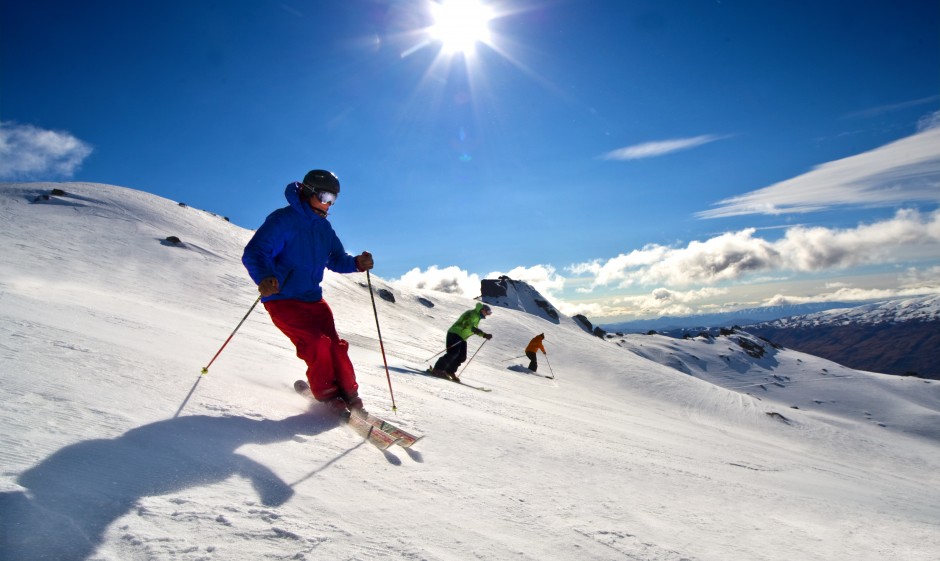
Now you maybe think what does snow skiing have to do with water. Snow is the freezing water into ice crystals and falling as snow, a light white flakes/powder covering the ground in layers. Snow skiing is a big part in New Zealand. In the off season the summer water activities take a back seat such as water skiing, biscuiting, wakeboarding etc. Snow skiing/snowboarding is on everyone’s mind. New Zealand has 15 public ski fields and snow parks. The 2013 season starts in June (the earliest opening is on the 6th Coronet Peak). My favourite mountain to ski on is Cardrona ski field.

Sometimes a ski field will have not enough good snow (powder) in certain areas. They move a team of snow machines around the mountain. This is how it works. Compressed air and water are feed into the snow machine where the water is converted into droplets. As the newly formed droplets are made they are forced into ice crystals. The air outside would normally be below 30oc (this process is normally done at night). The fake snow as it is called mixes with the real snow and creates the preferred amount of snow/powder in that area.


              http://www.snow.co.nz/map/


Water parks in New Zealand and Australia
If you ever happen to be in New Zealand or Australia and have a sudden craving to visit a water park have a look at the list below for water parks in your nearby area:

Australian Capital Territory:

·        Big splash, Canberra (http://bigsplashwaterpark.com.au/)

New South Wales

·        Jamberoo Action Park, Jamberoo (https://www.jamberoo.net/)

·        Wet’n’Wild, Sydney (http://www.wetnwildsydney.com.au/)

South Australia

·        The Beachhouse, Adelaide (http://www.thebeachouse.com.au/about_us.php)

Queensland

·        Wet’n’Wild Water World, Gold Coast (http://wetnwild.com.au/)

·        WhiteWater World, Gold Coast (http://www.whitewaterworld.com.au/)

·        Sugarworld (http://www.sugarworld.com.au/)

·        Wetside Water Park, Hervey Bay (http://www.widebaywater.qld.gov.au/quicklinks/wetsidewatereducationpark)

Western Australia

·        Adventure World, Perth (http://adventureworld.net.au/)

·        The Great Escape, Perth (http://www.thegreatescape.com.au/)

New Zealand

·        Waiwera Infinity Thermal Spa Resort, Auckland (http://www.waiwera.co.nz/)

·        Aquatic Park Parakai Springs, Auckland (http://www.parakaisprings.co.nz/)

·        Waterworld, Hamilton (http://www.hamiltonpools.co.nz/index.php?section=2)

·        Splash Planet, Hastings (http://www.splashplanet.co.nz/)


Maori Water Rights By Bryce Taylor


In 2011, the governments’ plan to sell New Zealand assets caught the attention of many Maori in the country, who attempted to ‘reclaim’ the rights to the New Zealand Foreshore and Seabed and prevent the government from selling shares of hydroelectric dams and wind farms that Maoris’ claim to own, that they were apparently given rights to the treaty of Waitangi on the 6 of February 1840 and due to a misleading translation in the document the water rights issue is an on-going argument between the government and Maori although it was resolved in an appropriate matter and the Maori council were denied rights to the foreshore and seabed in New Zealand, the asset sales were postponed due to the supreme court’s decision.

Links:

http://tvnz.co.nz/national-news/maori-take-water-rights-debate-waitangi-5333794


Links for pictures:

Water Technologies By Scott Hawkins

Water used in vehicles: In vehicles water is used for a few different things. One of these things is engine cooling, radiators run water around the motor of some vehicles to cool the engine and stop it overheating. The water is cooled by a fan as it heats up with the motor eventually. Another way water is used in some motor vehicles is window wipers, the fluid that is sprayed onto the windscreen is water based and cleans the screen.
Recreational uses:  Water is used very commonly over summer months for recreational used and just as commonly over winter months. Over summer it is used widely for boating and other water sports including wakeboarding, skiing, Knee boarding and many others. Over the winter months water is used a lot too! The only difference is it is used in a solid form instead of a liquid, in other words it is frozen. When lakes are frozen over they are ice skating rinks, when rain freezes into snow it is skied and snowboarded on.

Power harnessing through hydro:  With the modern technologies these days there are many ways that hydro is turned into power but one of the main ways is through dams. The water is built up behind a big wall and is slowly let through, running turbines as it goes past, creating power!! Although this method of power producing is some of the most commonly used, it is one of the more difficult and expensive to manufacture and make in the first place.

http://visual.merriam-webster.com/images/transport-machinery/road-transport/radiator.jpg
http://outdoorspeakerstore.com/images/X/wakeboarder.jpg
http://www.odt.co.nz/files/story/2009/07/benmore_dam_photo_by_craig_baxter__7975866934.JPG


Wednesday, 15 May 2013

Water and dairy in New Zealand By Harry Dennison

Dairy farming is not the only cause of water pollution in New Zealand but it is one of the large contributors. The problem with dairy is not just the dumping of effluent into our rivers, but the leaching of the nitrate and urine of the soil and into rivers. Although Fonterra does dump large amounts of effluent into the Manawatu River it is still being allowed, they argued that it would cost too much to dispose of it through pipes on land, even though it would only be a small percentage of their multimillion dollar profit. Not all dairy farming causes pollution; if the effluent is spread back onto the paddocks or stored in ponds then it will not pollute the rivers and streams. If you spread urea or even the urine from the cows can leach into rivers or streams if they are close. Unfortunately more and more dairy farmers are discharging their effluent into rivers as shown on the graph below.

Link:


Link for Picture: